
195/69 Tuesday, April 7, 2026
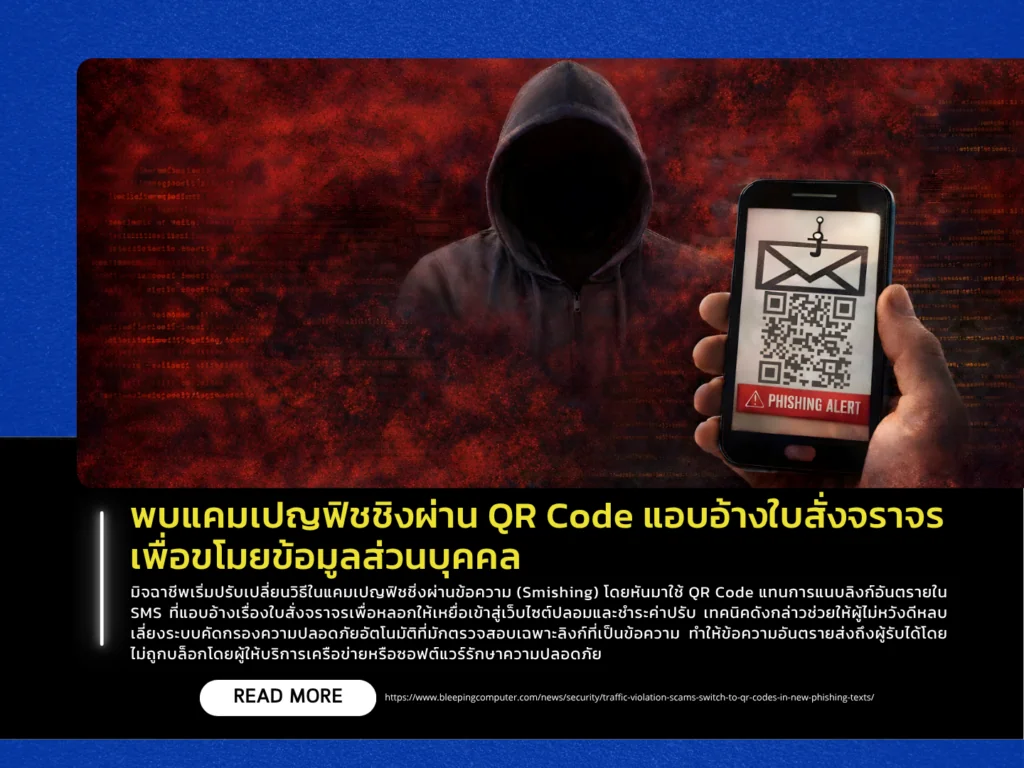
Cybercriminals are evolving their smishing (SMS phishing) tactics by using QR codes instead of malicious links in messages that impersonate traffic fines. Victims are tricked into scanning the QR code, which directs them to a phishing website where they are prompted to pay a supposed fine. This technique helps attackers bypass automated security filters that typically scan text-based URLs, allowing malicious messages to reach users without being blocked by telecom providers or security software.
Once the QR code is scanned, victims are redirected to fake websites designed to mimic official government or law enforcement portals, such as Departments of Motor Vehicles (DMV) in the United States or traffic authorities in the United Kingdom. These pages pressure users into entering personal information and credit card details to “settle” the fine. The stolen data is then used for financial fraud or identity theft. Attackers often impersonate multiple agencies across different regions to increase credibility.
Security experts warn that QR code-based phishing is particularly dangerous because many security tools cannot effectively analyze embedded content within images. Users are strongly advised not to scan QR codes received via unsolicited SMS or email. If notified about a traffic violation, individuals should verify the information directly through official websites or contact the relevant authorities via trusted channels before taking any action.