22/69 Wednesday, January 14, 2026
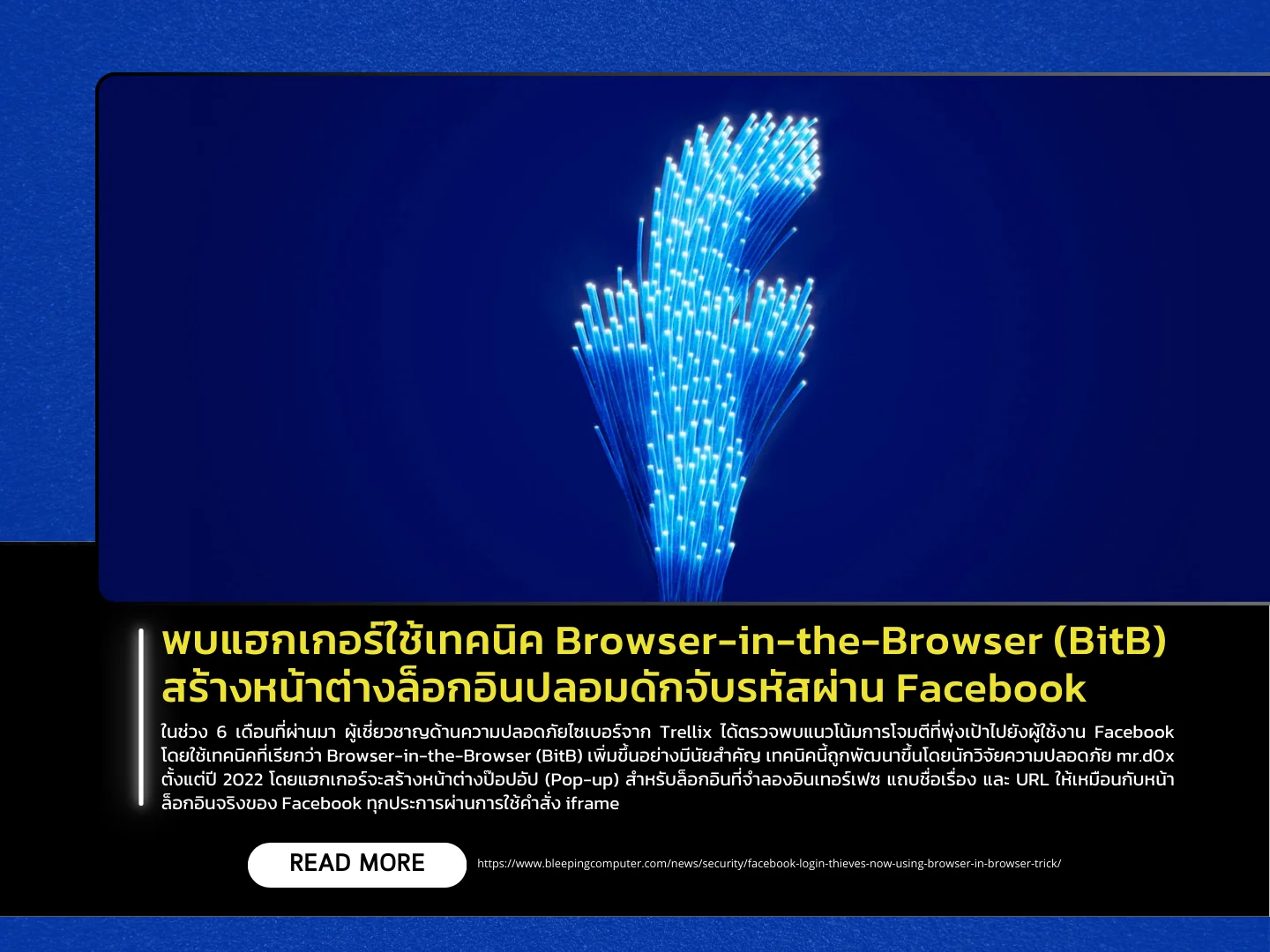
Over the past six months, cybersecurity experts at Trellix have observed a significant increase in attacks targeting Facebook users using a technique known as Browser-in-the-Browser (BitB). This technique was originally introduced by security researcher mr.d0x in 2022. Attackers create fake login pop-up windows that closely mimic the real Facebook login interface, including the window design, title bar, and URL, by using iframe-based elements. As a result, it becomes extremely difficult for ordinary users to visually distinguish these fake windows from legitimate browser login dialogs. In reality, the displayed window is merely a graphical overlay embedded within a malicious webpage, not an actual browser window.
Attackers have further enhanced the credibility of these campaigns by leveraging legitimate infrastructure, such as hosting phishing pages on cloud platforms like Netlify or Vercel, to evade security detection mechanisms. The attack typically begins with phishing emails impersonating law firms or Meta support teams, warning victims about alleged copyright violations or threatening account suspension to create fear and urgency. When victims click the embedded links, they are redirected to fake appeal pages or BitB-style login windows designed to harvest usernames, passwords, and personal information for fraud and account takeover.
To detect and defend against BitB attacks, users can perform a simple test by attempting to drag the login pop-up window outside the main browser window. If the window cannot be moved freely or remains confined within the webpage boundaries, it is likely a fake window created using an iframe. Users should also avoid clicking suspicious links in notification emails and instead access services by navigating directly to the official website. Most importantly, enabling two-factor authentication (2FA) provides an additional layer of protection in case login credentials are compromised.
