635/69 Wednesday, November 18, 2026
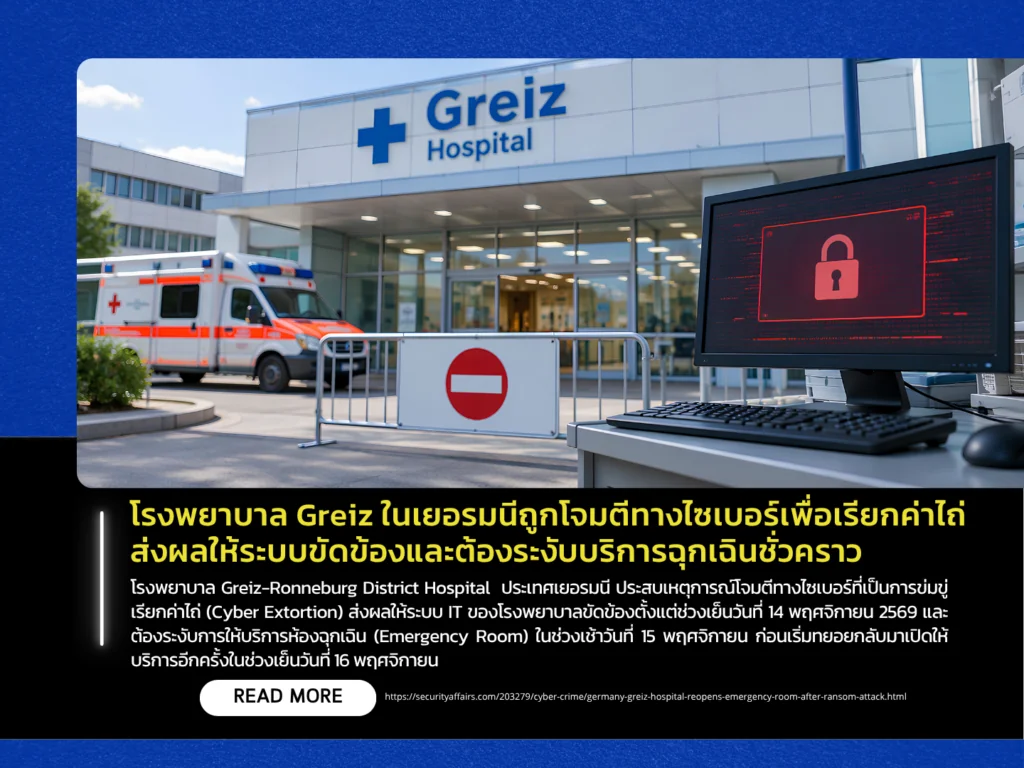
Greiz-Ronneburg District Hospital in Germany experienced a cyberattack involving an extortion attempt, resulting in disruptions to its IT systems beginning on the evening of November 14, 2026. The incident forced the hospital to temporarily suspend its emergency room services on the morning of November 15, before gradually resuming operations on the evening of November 16. Uwe Müller, a district spokesperson, confirmed that the incident was an attempted cyber extortion attack and that the hospital received an extortion message from the attackers on November 15. However, details regarding the attackers’ demands, the amount of ransom requested, and the methods used to gain access to the hospital’s network have not been disclosed. The public prosecutor’s office and state criminal police are currently investigating the incident. Authorities have reportedly identified potential leads and are examining suspects, although no individual or threat group has been officially identified as responsible for the attack.
Although the incident affected multiple components of the hospital’s IT infrastructure, Tommy Jehmlich, the hospital’s Managing Director, stated that medical personnel were able to continue providing care and treatment to hospitalized patients, including scheduled medical procedures. However, certain medical services had to be assessed on a case-by-case basis depending on system availability, allowing the emergency dispatch center in Gera to redirect incoming patients to other hospitals capable of providing appropriate care. The hospital subsequently began accepting emergency patients again in coordination with local emergency medical services. Nevertheless, its digital treatment planning systems continued to experience technical difficulties. The full extent of the damage and whether any patient information was compromised remain unconfirmed, as the investigation is still ongoing.
The incident highlights the cybersecurity risks facing healthcare facilities, where cyberattacks can directly affect the continuity of medical services and patient care, particularly systems supporting clinical treatment and emergency admissions. Although hybrid threats have been discussed in the broader context of Germany’s national security environment, there is currently no confirmed evidence linking the Greiz-Ronneburg hospital attack to any specific threat group. Healthcare institutions and public health organizations should therefore establish comprehensive Incident Response Plans and Business Continuity Plans (BCPs). These measures should include maintaining paper-based backup procedures for recording and accessing patient treatment information when digital systems become unavailable, establishing coordination protocols for transferring patients to alternative healthcare facilities, and regularly testing emergency response and operational continuity procedures. Such preparations are essential to minimizing service disruptions and ensuring patient safety during cybersecurity incidents.