653/69 Thursday, November 26, 2026
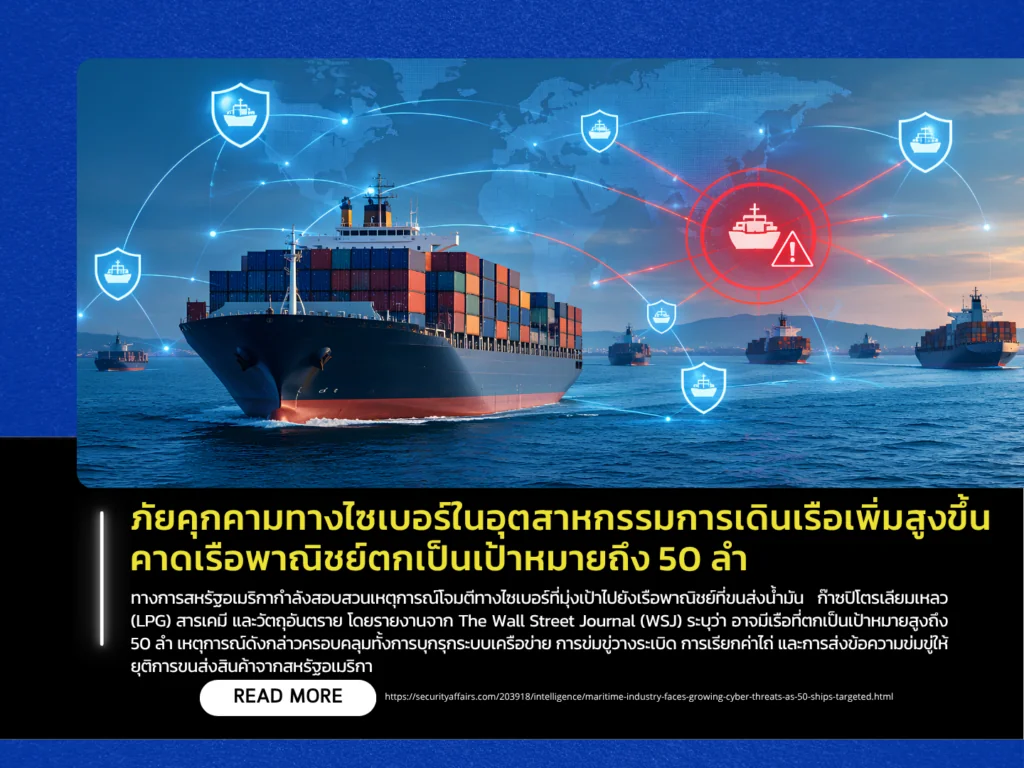
U.S. authorities are investigating cyber incidents targeting commercial vessels transporting oil, liquefied petroleum gas (LPG), chemicals, and hazardous materials. According to a report by The Wall Street Journal (WSJ), as many as 50 vessels may have been targeted. The incidents reportedly involved network intrusions, bomb threats, ransom demands, and threatening messages ordering operators to stop transporting cargo from the United States. Authorities are examining the possibility that Iran and Russia may be connected to the activity; however, no evidence has yet confirmed attribution to either country. The U.S. Coast Guard has deployed cybersecurity specialists to inspect and mitigate risks aboard at least four vessels traveling to U.S. ports.
Reports indicate that attackers have exploited vulnerabilities in Fortinet networking equipment, which is widely used in the maritime industry. In September 2026, the U.S. Coast Guard Cyber Command and the Federal Bureau of Investigation (FBI) jointly issued an advisory warning about the exploitation of vulnerabilities in FortiGate devices to target maritime transportation networks. Abnormal incidents have also been reported aboard vessels operating in Europe and Asia, including the Vivit Africa, which was transporting liquefied natural gas (LNG) from the United States to Italy. The vessel reportedly experienced onboard system disruptions and received a bomb threat, although it has not been confirmed that the system issues were caused by a cyberattack.
The incidents highlight growing cybersecurity risks within the maritime transportation sector, as modern commercial vessels increasingly depend on interconnected Information Technology (IT) and Operational Technology (OT) systems for communications, navigation, and cargo management. A network compromise could therefore affect operations, safety, and supply chain continuity. However, there is currently no evidence that attackers have gained control of vessel navigation or propulsion systems. Maritime operators should promptly review and patch vulnerable network devices, strengthen controls over remote access, segment IT and OT networks, and continuously monitor for anomalous activity to reduce the risk of cyber threats affecting critical maritime transportation infrastructure.