155/69 Wednesday, March 18, 2026
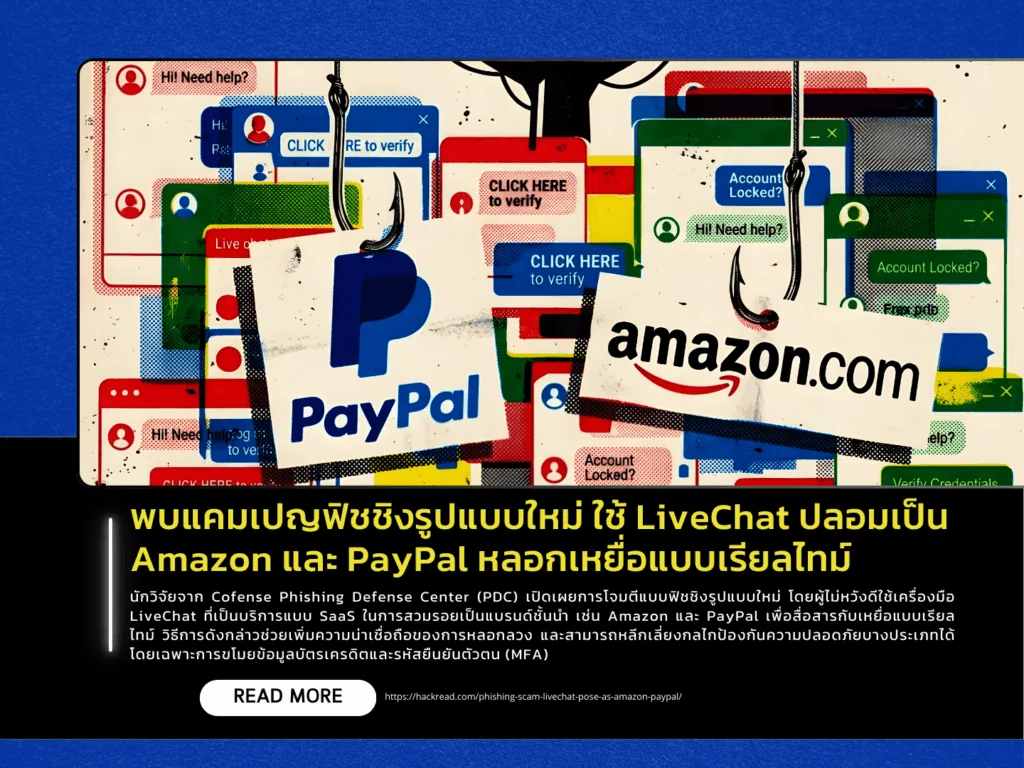
Researchers from the Cofense Phishing Defense Center have uncovered a new phishing technique in which attackers leverage LiveChat, a SaaS-based communication tool, to impersonate well-known brands such as Amazon and PayPal and interact with victims in real time. This approach significantly increases the credibility of the scam and helps bypass certain security controls, particularly in stealing credit card information and multi-factor authentication (MFA) codes. The attack typically begins with a convincing phishing email, such as a notification of a $200 PayPal refund or a pending order confirmation. The email contains a link (e.g., to domains like lc[.]chat) that redirects users to a chat interface resembling an official customer support system or chatbot. Once engaged, attackers customize the chat interface to closely mimic legitimate brand environments.
A key factor behind the effectiveness of this attack is users’ familiarity with LiveChat systems commonly used on legitimate e-commerce websites, which lowers suspicion and increases trust. Attackers employ social engineering tactics, such as reassuring victims about the security of their information, to build credibility before extracting sensitive data and potentially taking over accounts. This can ultimately lead to significant financial losses.
According to Cofense, this campaign highlights the ongoing evolution of cyber threats that combine multiple techniques, including brand impersonation, psychological manipulation, and data theft. Users are advised to remain cautious, especially when encountering unexpected emails or offers, such as refund notifications or requests to verify information, and to avoid sharing sensitive data through channels that cannot be clearly verified as legitimate.
Source https://hackread.com/phishing-scam-livechat-pose-as-amazon-paypal/