268/69 Tuesday, May 19, 2026
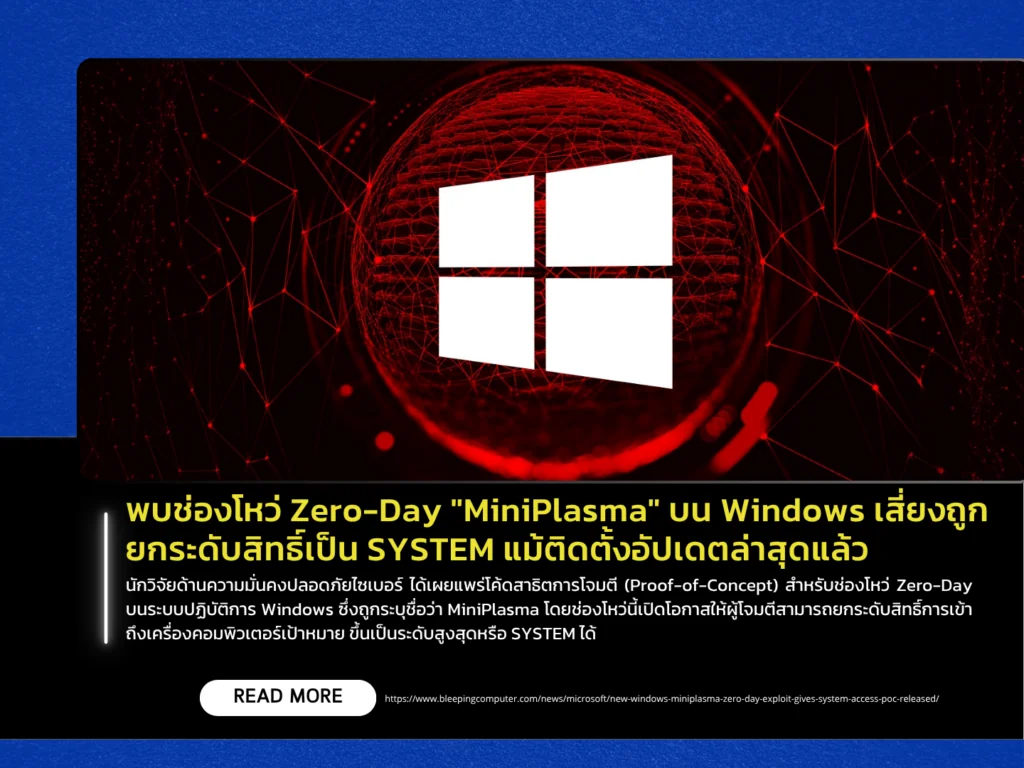
Cybersecurity researchers have released a Proof-of-Concept (PoC) exploit for a new Windows Zero-Day vulnerability dubbed MiniPlasma. The vulnerability allows attackers to escalate privileges on affected Windows systems to the highest privilege level, SYSTEM, even if the target machine has already installed the latest Microsoft security updates through May 2026. The incident has raised significant concern because both the source code and compiled exploit binaries have been publicly released, potentially enabling threat actors to weaponize the exploit against enterprise and consumer systems with minimal effort.
Preliminary analysis indicates that the vulnerability abuses flaws in the Windows Cloud Filter driver (cldflt.sys), which improperly handles registry key creation without sufficient permission validation. Although a similar issue was previously reported and addressed under CVE-2020-17103 in late 2020, researchers claim the underlying flaw still persists and remains exploitable using a comparable technique. Testing reportedly demonstrated that when the exploit is executed from a standard user account, the system modifies registry values and displays a successful exploitation message before launching a new Command Prompt window running under “nt authority\system,” effectively granting full control over the machine. Additional vulnerability analysts confirmed that the exploit continues to work on current production versions of Windows 11, while certain developer preview builds appear unaffected.
At present, Microsoft is reportedly investigating the issue, and no official security patch has yet been released for this newly disclosed vulnerability. Organizations and system administrators are advised to closely monitor systems for suspicious activity and implement interim mitigation measures. Recommended defensive actions include tightening privilege restrictions for standard users, enforcing application control policies to block execution of untrusted binaries, and increasing monitoring for unauthorized registry modifications involving the .DEFAULT user hive. Security teams should also monitor for abnormal privilege-elevated command prompt activity and continue tracking Microsoft security advisories so patches can be deployed immediately once available.