331/69 Friday, June 19, 2026
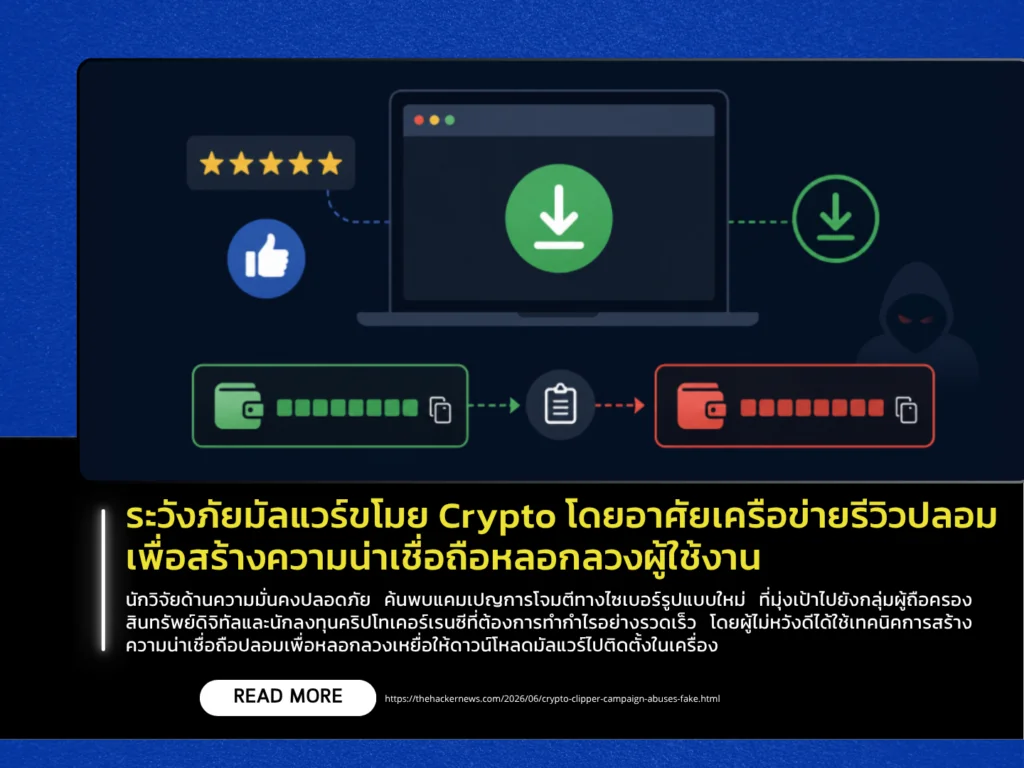
Cybersecurity researchers have uncovered a new cybercrime campaign targeting cryptocurrency holders and digital asset investors seeking quick profits. The attackers use sophisticated trust-building techniques to trick victims into downloading and installing malware on their devices. What makes this campaign particularly noteworthy is that the threat actors do not rely solely on technical vulnerabilities; instead, they employ marketing and reputation-building tactics similar to those used by legitimate businesses, including purchasing advertising space on news websites, generating fake download statistics, and operating networks of fraudulent accounts to create a positive image for their crypto-stealing malware.
The malware used in this campaign is a Crypto Clipper developed in the Rust programming language and capable of targeting both Windows and macOS systems. Once installed, the malware continuously monitors the system clipboard. When a user copies a cryptocurrency wallet address in preparation for a transaction, the malware automatically replaces it with a wallet address controlled by the attacker. In addition, the threat actors have established an extensive network of fake supporters to increase credibility. These activities include posting positive comments on platforms such as VirusTotal to manipulate security assessments, operating YouTube channels with more than 90,000 subscribers using AI-generated content to appear legitimate, artificially inflating download counts on SourceForge, and distributing press releases through media distribution services to further enhance the campaign’s perceived legitimacy.
This activity highlights the evolving tactics of cybercriminals, who are increasingly using positive reputation manipulation across public platforms to gain users’ trust and facilitate the spread of malware. Similar techniques could also be used in future campaigns involving ransomware or information-stealing malware. System users and cryptocurrency investors should exercise caution when downloading software and tools, and should not rely solely on download numbers or positive reviews as indicators of legitimacy. To reduce risk, users should carefully verify software sources, avoid installing applications from unofficial channels, and, most importantly, always verify the destination cryptocurrency wallet address before confirming any transaction to prevent losses caused by clipboard manipulation attacks.
Source https://thehackernews.com/2026/06/crypto-clipper-campaign-abuses-fake.html