
631/69 Tuesday, November 17, 2026
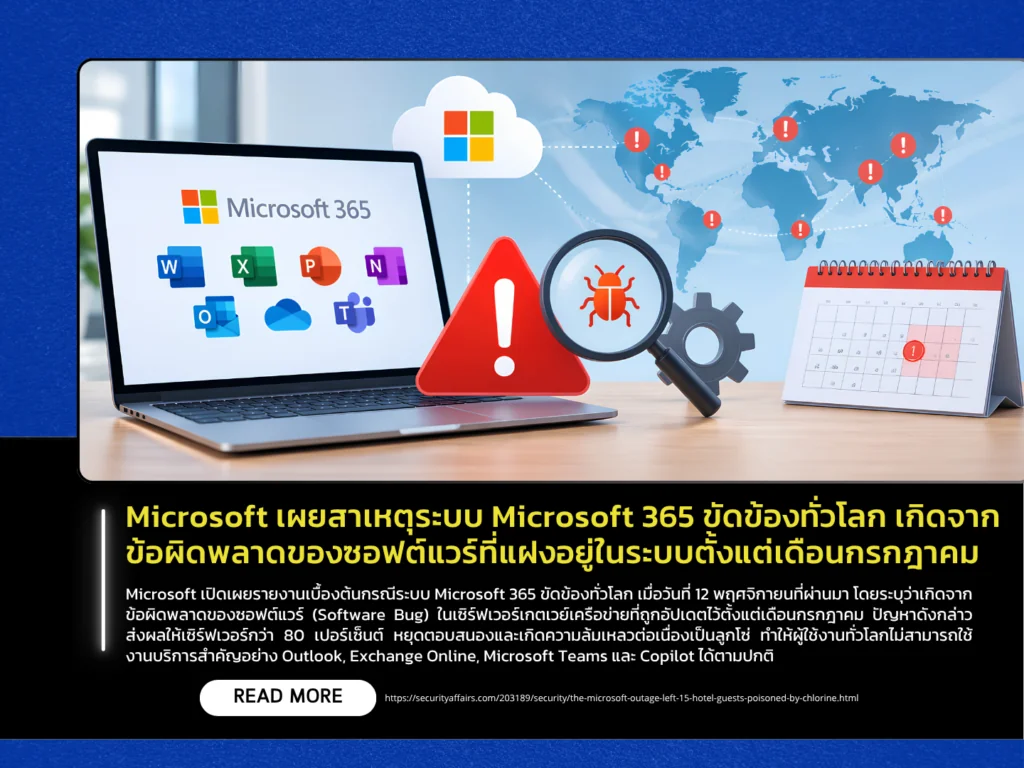
Microsoft has released a preliminary report on the global Microsoft 365 outage that occurred on November 12, 2026, revealing that the disruption was caused by a software bug in network gateway servers that had been updated in July. The issue caused more than 80% of the servers to become unresponsive, triggering a cascading failure that disrupted critical services worldwide, including Outlook, Exchange Online, Microsoft Teams, and Copilot. Users experienced significant difficulties accessing email services, along with severe delays in sending and receiving messages. All affected services were successfully restored by November 13, 2026.
According to the preliminary technical findings published through the Microsoft 365 Admin Center, the incident resulted from three contributing factors occurring simultaneously: a previously undetected software bug, increased network traffic following a Microsoft Teams failover to the same network infrastructure used by Exchange Online approximately 15 hours before the outage, and a nearly 14% reduction in gateway server capacity caused by an unrelated issue. Microsoft explained that the software bug had not been detected during load testing because the testing environment used hardware with fewer CPU cores and lower processing capabilities than the production servers. The underlying resource contention issue became more severe on newer servers equipped with higher core counts. As servers began to become unresponsive, the system automatically redirected traffic to other operational servers, overwhelming their capacity and causing them to fail in succession within less than two hours. Meanwhile, mechanisms designed to prevent failures from spreading across regions were unable to contain the cascading disruption. Furthermore, restoring Exchange Online proved more challenging than recovering other services, such as OneDrive and SharePoint, because Exchange Online could not be switched to alternative infrastructure. When affected servers were restarted, the large volume of accumulated traffic immediately flooded the systems, causing the servers to become overloaded and fail again.
Microsoft has since developed and deployed a fix across all affected servers, expanded system capacity, enhanced monitoring procedures, and implemented additional safeguards to prevent traffic redistribution from triggering similar cascading failures in the future. Senior Microsoft executives have publicly apologized for the disruption and its impact on customers’ business operations. The company also stated that a more comprehensive investigation remains underway, with a final incident report expected to be released later this week. Organizations and system administrators using Microsoft 365 are advised to closely monitor the final incident report through the Microsoft 365 Admin Center, verify email delivery status, and review any messages or data that may have remained queued during the outage. Additionally, organizations should reassess their Business Continuity Plans (BCPs) and establish alternative communication channels to minimize operational risks and potential disruptions resulting from future outages of critical cloud services.