283/69 Tuesday, May 26, 2026
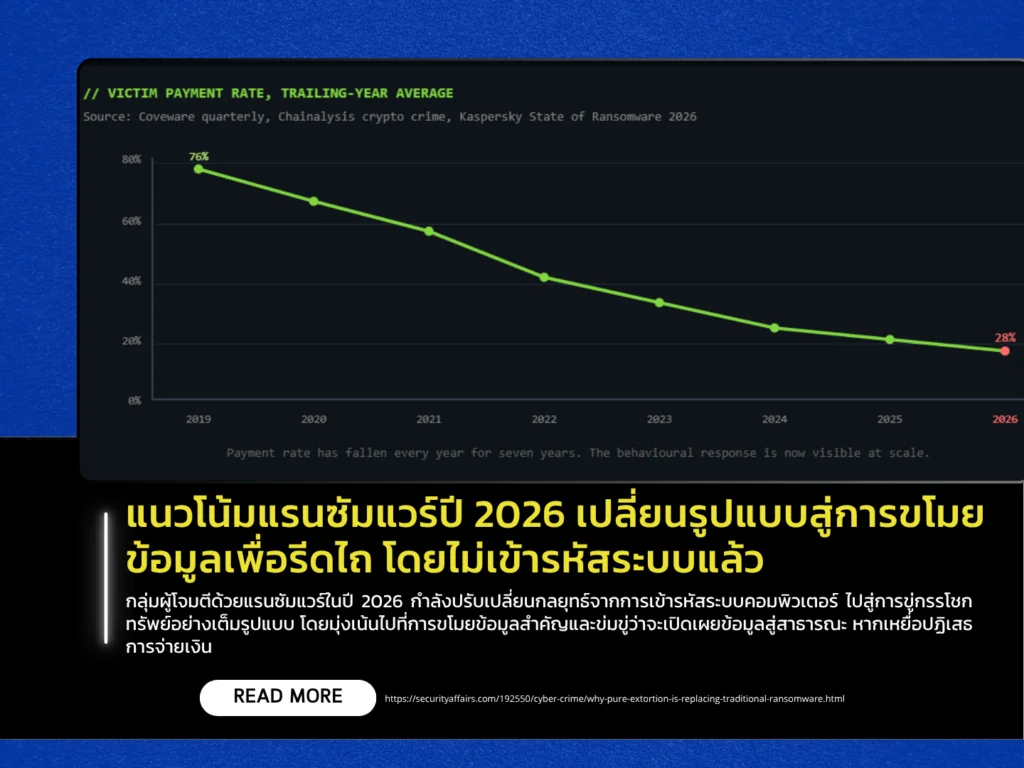
Ransomware groups in 2026 are increasingly shifting their tactics away from encrypting victim systems and toward pure data extortion operations, focusing primarily on stealing sensitive information and threatening to publicly leak the data if victims refuse to pay. One of the key drivers behind this shift is the steady decline in ransom payment rates over the past seven years, dropping from 76% in 2019 to only 28% in 2026. As organizations become more resilient in restoring systems from backups, attackers are no longer relying solely on disrupting operations through encryption. Instead, they are exploiting the reputational damage, regulatory consequences, and legal risks associated with data breaches. Even when victims refuse to pay, threat actors can still profit by selling stolen data directly to cybercriminal groups operating on underground markets or to identity theft actors.
By avoiding file encryption, attackers can conduct operations more quickly, quietly, and profitably. Traditional ransomware encryption often leaves significant forensic evidence and increases the likelihood of detection during the attack lifecycle. Modern threat actors instead prioritize disabling endpoint detection and response (EDR) systems before silently exploring internal networks and exfiltrating sensitive data. The time between initial compromise and public data exposure has now been reduced to just days-or even hours-in some cases. One prominent example involved the ShinyHunters group, which reportedly stole more than 3.65 terabytes of data from Instructure, impacting approximately 275 million individuals. Another case involved the Nitrogen group, which allegedly exfiltrated nearly 8 terabytes of confidential manufacturing data from Foxconn. In both incidents, the primary pressure on victims came from the threat of public data disclosure rather than system encryption.
As ransomware tactics continue evolving, relying solely on backup and recovery strategies is no longer sufficient for cyber defense. Organizations may successfully restore operations while still suffering severe reputational and regulatory damage from leaked information. Security teams should therefore shift their defensive focus toward detecting unauthorized data exfiltration and monitoring outbound network traffic. Organizations are encouraged to implement Data Loss Prevention (DLP) solutions, monitor abnormal cloud storage usage, and maintain offline logging and audit systems. In addition, incident response plans should include rapid breach disclosure and crisis communication procedures to reduce long-term operational, legal, and reputational risks associated with modern data extortion attacks.