433/69 Tuesday, August 11, 2026
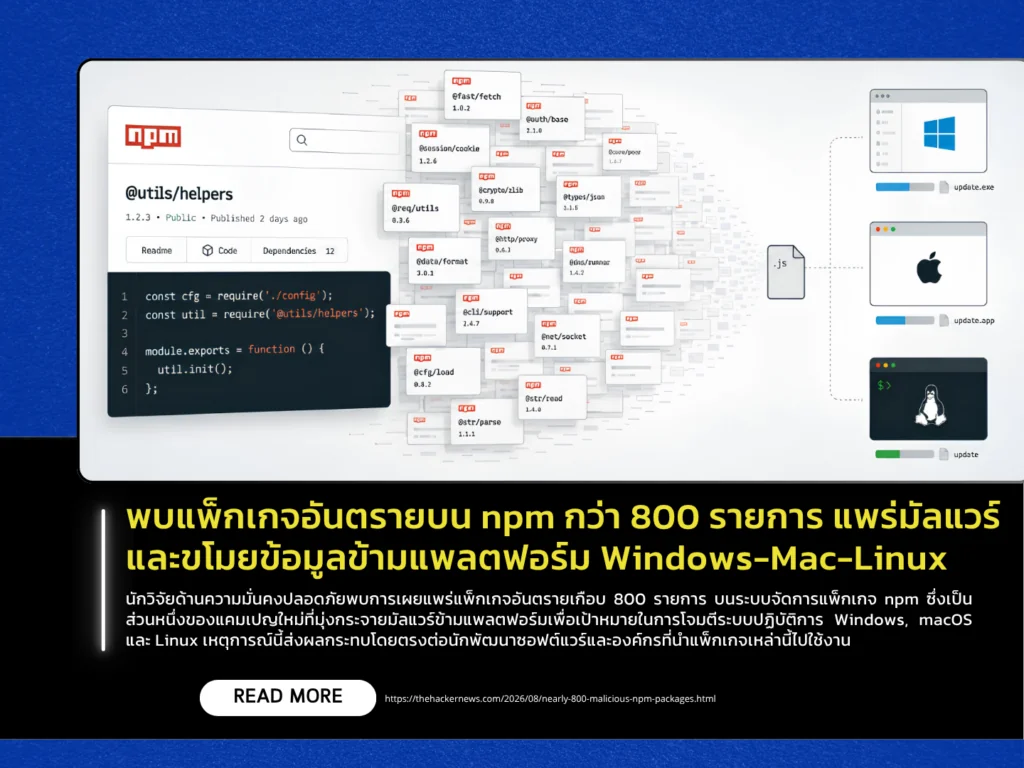
Cybersecurity researchers have discovered nearly 800 malicious packages published on the npm package registry as part of a new campaign designed to distribute cross-platform malware targeting Windows, macOS, and Linux systems. The campaign poses a direct risk to software developers and organizations that may unknowingly incorporate these packages into their environments. Threat actors reportedly used AI-generated package descriptions and typosquatting techniques, deliberately naming malicious packages to resemble widely used legitimate packages in an effort to trick developers into downloading and installing them. Once executed, the packages can deploy remote access trojans (RATs) and information-stealing malware on affected systems.
The attack differs from conventional software supply chain campaigns, which commonly rely on automated scripts executed during the installation process. Instead, the malicious packages include instructions designed to persuade developers to execute them through standard module import functions. Once activated, the malware identifies the victim’s operating system and processor architecture before downloading and executing the appropriate payload. If conventional communication channels fail, the malware can also use DNS-based techniques to retrieve malicious data, reconstruct additional code, and continue execution. Reported activities include attempts to disable or interfere with operating system security controls on Windows, evade analysis on macOS, with preliminary findings suggesting a possible focus on financial information, and install remote access tools on Linux systems to receive commands from attackers. Researchers also identified malicious code concealed within files designed to resemble legitimate telemetry or statistics-related components in order to evade detection.
To reduce the risk, system administrators and software developers should carefully review third-party packages and libraries before introducing them into production or development environments. Package names should be checked closely for spelling variations, while the reputation, maintenance history, and legitimacy of the source should also be assessed. Organizations should additionally monitor for unusual behavior within their networks, such as software processes attempting to communicate with unknown external servers, unauthorized changes to core operating system settings, or the execution of programs with unclear origins. Combining software and code security scanning tools with least-privilege access controls can help organizations prevent and reduce the impact of software supply chain attacks.
Source https://thehackernews.com/2026/08/nearly-800-malicious-npm-packages.html